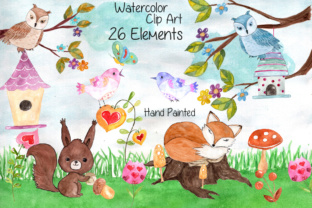
Watercolor Forest Animals Clip Art: A Designer’s Review
When I first opened the folder containing the Watercolor Forest Animals Clip Art, my immediate reaction was one of visual relief. In a content marketing landscape saturated with rigid vector shapes and sterile corporate aesthetics, this collection felt like a breath of fresh air. As a brand designer who frequently advises small business owners and creative entrepreneurs on their visual identity, I look for assets that do more than just fill space; they need to evoke emotion, establish tone, and support the narrative before a single word is read.
This specific set of Illustrations delivers exactly that. The soft, bleeding edges of the watercolor technique create an organic, handcrafted feel that resonates deeply with audiences seeking authenticity. Whether you are launching a new line of handmade soaps, designing packaging for an artisanal food brand, or creating editorial graphics for a lifestyle blog, these visuals offer a premium yet approachable aesthetic. They signal to your audience that your brand values craftsmanship, nature, and warmth.
The First Impression: Mood and Audience Perception
The primary value of any graphic design asset lies in its ability to communicate mood instantly. Watercolor art carries inherent connotations of creativity, softness, and human touch. When applied to marketing materials, it suggests that the product behind the image is carefully made rather than mass-produced. This is crucial for building audience trust in today’s market, where consumers are increasingly skeptical of overly polished, artificial imagery.
From a branding perspective, these illustrations bridge the gap between casual friendliness and professional quality. They are not childish, nor are they overly serious. Instead, they strike a balance that works exceptionally well for:
- Lifestyle Brands: Connecting with audiences interested in wellness, home decor, and sustainable living.
- Educational Content: Making learning materials feel inviting and less intimidating for children or adults alike.
- Seasonal Campaigns: Perfectly capturing the cozy, rustic vibes of autumn or the fresh renewal of spring.
By using these design assets, you are not just decorating a page; you are setting an emotional stage. The subtle variations in color saturation and brush texture ensure that each piece feels unique, adding depth to your brand identity without requiring complex custom illustration work.
Real-World Application: From Social Media to Packaging
To truly understand the utility of this asset, let’s look at a practical scenario. Imagine you are a small business owner preparing to launch a new line of herbal teas. You need a cohesive visual strategy that spans your website, social media channels, and physical packaging. Here is how Watercolor Forest Animals Clip Art can integrate into that workflow seamlessly.
Social Media Graphics and Digital Ads
In the crowded feed of Instagram or Pinterest, static images often get lost. However, the organic flow of watercolor draws the eye differently than sharp geometric lines. You can use these illustrations as background elements for social media graphics, allowing text overlays to sit cleanly on top while maintaining visual interest. For Pinterest pins, which drive significant traffic for digital sellers and bloggers, these images perform well because they align with the platform’s aesthetic preference for inspirational and aesthetically pleasing content. When used in digital ads, they help lower the "ad fatigue" by feeling more like native content than promotional material.
Packaging Design and Product Labels
For physical products, first impressions happen in seconds. If you are designing product labels or boxes, these illustrations provide a focal point that elevates the perceived value of the item. A simple jar of jam or a box of candles becomes a gift-like experience when adorned with delicate forest animal motifs. This is particularly effective for small business branding, where differentiation is key. The modern design sensibility of the watercolor style ensures it does not look dated, keeping your brand relevant alongside larger competitors.
Editorial Design and Lead Magnets
If you are creating lead magnets such as e-books, checklists, or printable planners, these illustrations break up dense text effectively. They serve as decorative brand elements that guide the reader’s eye through the document. In editorial design, whether for a blog post header or a newsletter banner, they add personality and reinforce the thematic connection to nature or tranquility. This consistency strengthens visual hierarchy, ensuring that your most important messages stand out against a supportive, beautiful backdrop.
Strategic Limitations and Careful Placement
No single asset is a universal solution, and a professional designer knows when to exercise restraint. While Watercolor Forest Animals Clip Art is versatile, there are contexts where it may not be the optimal choice.
First, avoid using these illustrations for formal corporate branding. If your client is a law firm, a financial institution, or a tech startup aiming for a sleek, minimalist, and high-tech image, the organic, soft nature of watercolor may undermine the message of precision and stability. In these cases, clean vectors or abstract geometric shapes are more appropriate.
Second, be cautious with small mobile graphics and low-resolution displays. Watercolor relies on subtle gradients and soft edges that can become muddy or pixelated if scaled down too far. Always test the asset at the actual size it will appear on screens. If the details are lost, the impact is diminished.
Finally, consider the competition for attention. In text-heavy ads or layouts with dense information, these illustrations might compete with your copy rather than supporting it. Use them as accents or backgrounds, but ensure your typography remains the clear hero of the message. Overcrowding the design leads to visual noise, which hurts professional branding efforts.
Practical Brand Designer Notes for Implementation
To maximize the effectiveness of this asset, I recommend following a few practical steps during your design process. First, always test it with your brand color palette. Even though watercolor has natural variations, ensure the dominant hues complement your existing primary and secondary colors. You may need to adjust the saturation slightly in your editing software to achieve perfect harmony.
Next, evaluate the asset in black and white. This helps you understand the underlying shape and form of the illustration, independent of color. If the silhouette is weak, the design will struggle regardless of how beautiful the colors are. Additionally, place the asset inside real campaign mockups—such as a phone screen displaying an Instagram post or a printed card—to see how it interacts with other elements.
Typography pairing is another critical factor. These illustrations pair beautifully with serif fonts for a classic, elegant look, or with handwritten fonts to enhance the personal, crafty vibe. However, they may clash with highly technical sans-serif fonts unless balanced carefully with ample negative space. Always review spacing and balance to prevent the design from feeling cluttered.
Lastly, confirm the commercial license before using these assets in paid campaigns or client work. Understanding the usage rights protects your business and ensures ethical use of creative design resources. Whether you are purchasing a SVG design for print-on-demand products or a PNG design for web use, clarity on licensing is non-negotiable for sustainable content marketing.
In conclusion, Watercolor Forest Animals Clip Art is a powerful tool for brands looking to inject warmth, authenticity, and visual appeal into their communications. By understanding its strengths, respecting its limitations, and integrating it strategically into your marketing visuals, you can create campaigns that not only attract attention but also build lasting connections with your audience.